Upcoming Events
Announcements & Call for Papers
Publications
The Medici Archive Project (MAP) is an independent research institute whose aim is to preserve and valorize the archives of the Medici dynasty, which comprise over fifteen million documents (many of them are featured in the MIA DATABASE). MAP also serves as a major academic hub for scholars and students worldwide in the field of Italian Renaissance and early modern studies.
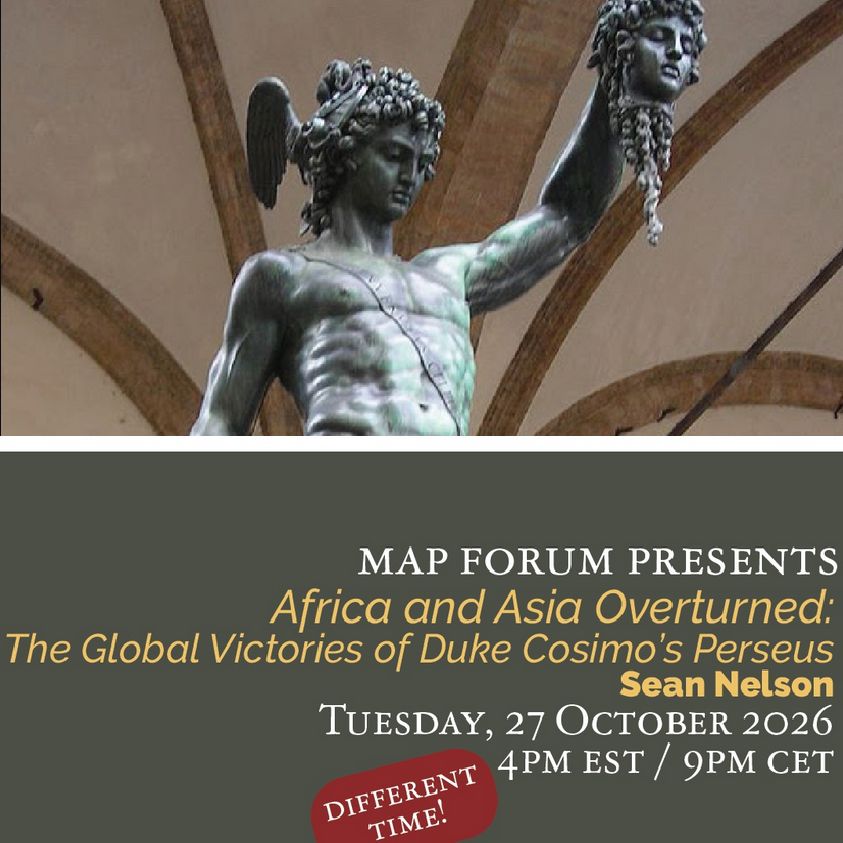
Reexamining Duke Cosimo de’ Medici’s Perseus, finished by Benvenuto Cellini in 1554, this presentation will argue that upon its public unveiling the sculpture promoted victory rhetoric over Ottoman Africa and Asia. Observing classical and Renaissance sources that located Perseus’ mythological deeds in similar regions, the sculpture will be situated within Cosimo’s participation in anti-Ottoman naval efforts, such as the sieges of Monastir and Mahdia in 1550. Sean Nelson teaches undergraduate and graduate courses on the Global Renaissance at Syracuse University Florence, with particular focus on cross-cultural interactions between the Grand Duchy of Tuscany and the Islamic Lands.
Reexamining Duke Cosimo de’ Medici’s Perseus, finished by Benvenuto Cellini in 1554, this presentation will argue that upon its public unveiling the sculpture promoted victory rhetoric over Ottoman Africa and Asia. Observing classical and Renaissance sources that located Perseus’ mythological deeds in similar regions, the sculpture will be situated within Cosimo’s participation in anti-Ottoman naval efforts, such as the sieges of Monastir and Mahdia in 1550. Sean Nelson teaches undergraduate and graduate courses on the Global Renaissance at Syracuse University Florence, with particular focus on cross-cultural interactions between the Grand Duchy of Tuscany and the Islamic Lands.
Individuals who join Friends of MAP share in the thrill of historical discovery thanks to special experiences reserved just for them, including the MAP Forum (our online lecture series), and a host of other features such as weekly free lessons in reading Italian documents called “Friday Lunch Letters.”