Director
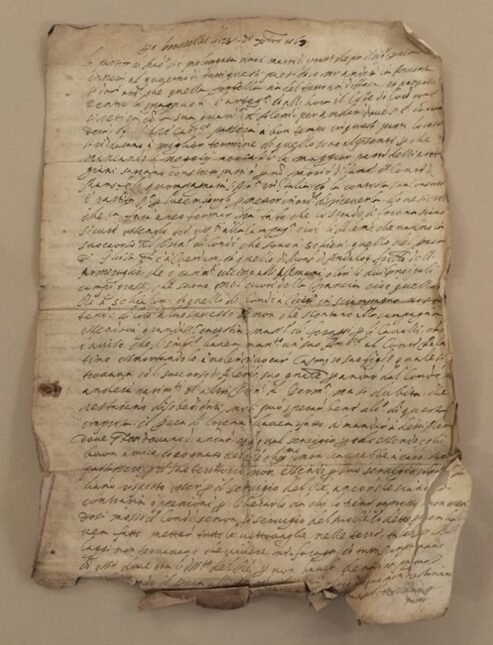
Long before the newspaper assumed its familiar place within European public life, information circulated through a sophisticated manuscript infrastructure that connected courts, cities, ports, and commercial communities across the continent and beyond. At the heart of this system stood the avvisi, handwritten newsletters copied by professional scribes, transmitted through expanding postal networks, and read by princes, diplomats, merchants, ecclesiastics, and government officials.
Conveying political intelligence, diplomatic correspondence, commercial information, reports of war, epidemic disease, natural disasters, court ceremony, and innumerable occurrences of everyday life, avvisi constituted one of the principal instruments through which early modern Europeans observed, interpreted, and governed an increasingly interconnected world.
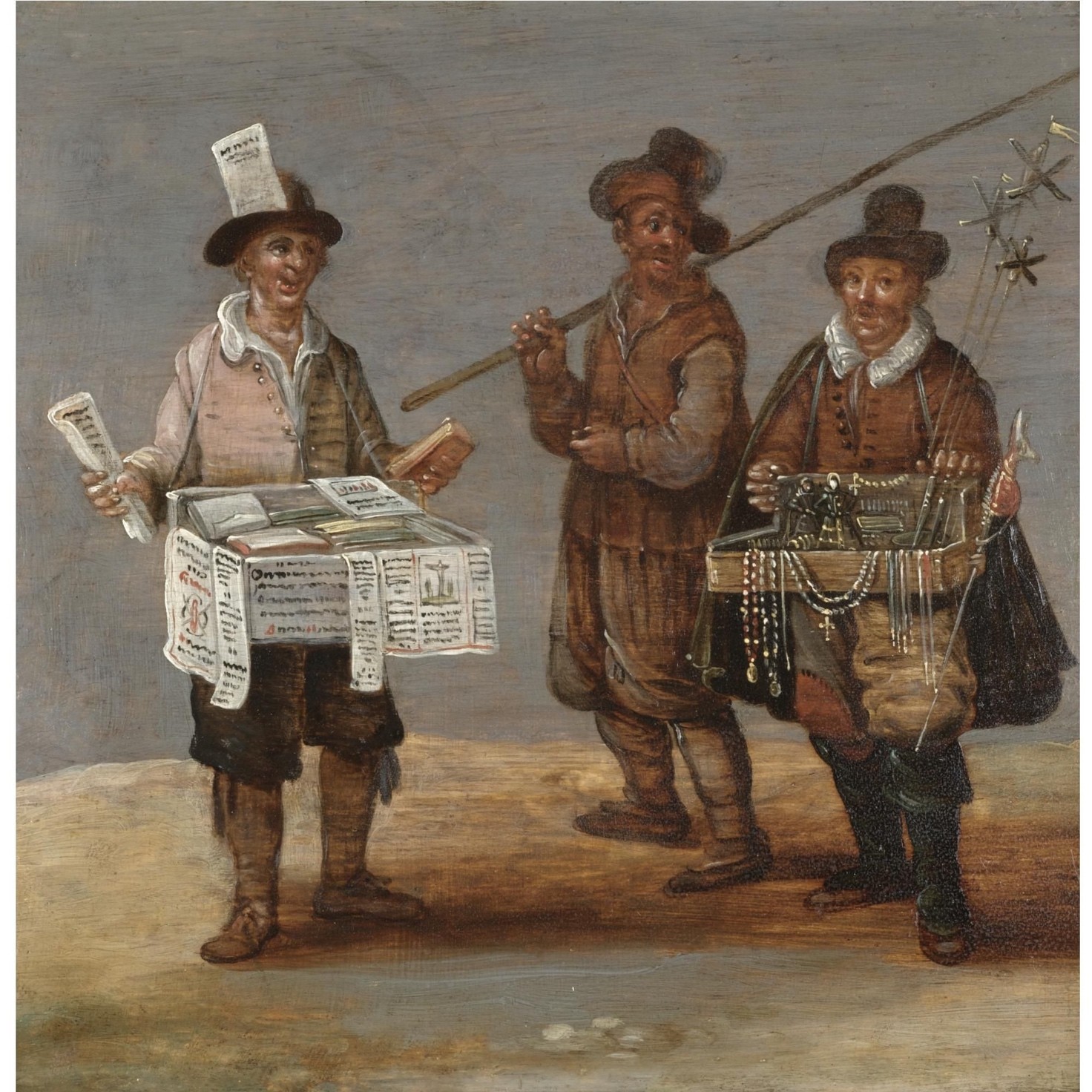
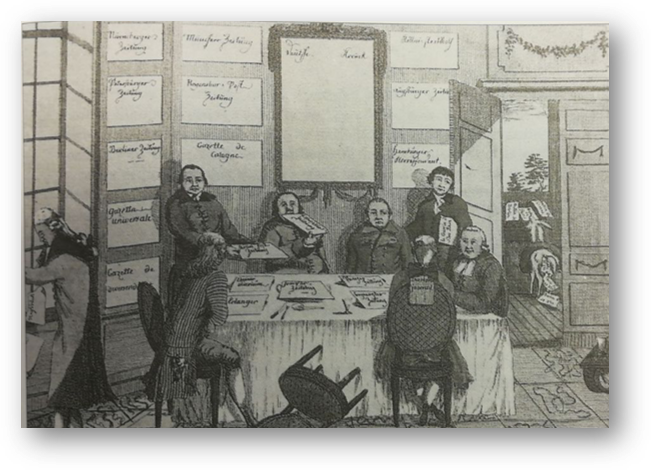
The Birth of News is The Medici Archive Project’s research programme devoted to the historical study of information, communication, and media between the Renaissance and the Enlightenment. Rather than approaching manuscript newsletters simply as documentary witnesses to political events, the programme considers them as privileged evidence for understanding the emergence of Europe’s first large-scale information society. Its central concern is not merely what early modern people knew, but how knowledge was produced, disseminated and transformed through the circulation of news.
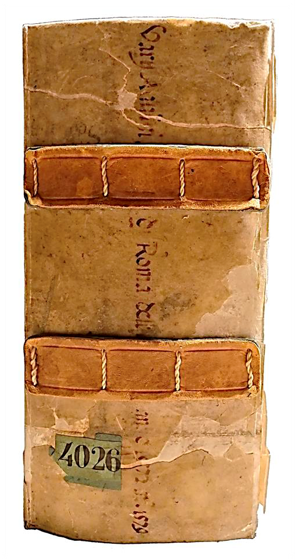
The programme is anchored in the documentary legacy of the Medici power. From the sixteenth to the eighteenth century, the Medici government cultivated an extensive network of correspondents extending across Europe, the Mediterranean, North Africa, and the Ottoman world, systematically collecting political and commercial intelligence alongside diplomatic and cultural news. Preserved today within the Mediceo del Principato at the Archivio di Stato di Firenze, this remarkable archive—comprising more than 100,000 manuscript newsletters together with diplomatic dispatches, mercantile correspondence, printed gazettes, maps, and administrative records—offers an exceptional vantage point from which to reconstruct the infrastructures, practices, and geographies of communication that underpinned early modern political life.
Drawing upon these collections, The Birth of News investigates the circulation of information across political, diplomatic, commercial, and cultural networks. Its research encompasses the materiality of news, the relationship between manuscript, print, and oral communication, the mobility of texts and people, the formation of public opinion, the circulation of rumours and misinformation, the organisation of postal systems, and the role of communication in moments of political upheaval, military conflict, epidemic disease, environmental catastrophe, and economic uncertainty. By placing information at the centre of historical enquiry, the programme seeks to illuminate the ways in which communication not only reflected historical processes but actively contributed to shaping them.
The Birth of News programme provides an exceptional environment in which to pursue these questions. Combining long-standing expertise in archival scholarship with digital humanities, corpus analysis, spatial methodologies, and international collaboration, the programme develops new approaches to the study of historical information systems while remaining firmly grounded in documentary research. Through the Medici Interactive Archive (MIA) and related initiatives, it supports the transcription, annotation, digital publication, and long-term preservation of manuscript sources, creating research infrastructures that enable new forms of scholarly investigation while ensuring wider access to one of Europe’s most important archival news collections.
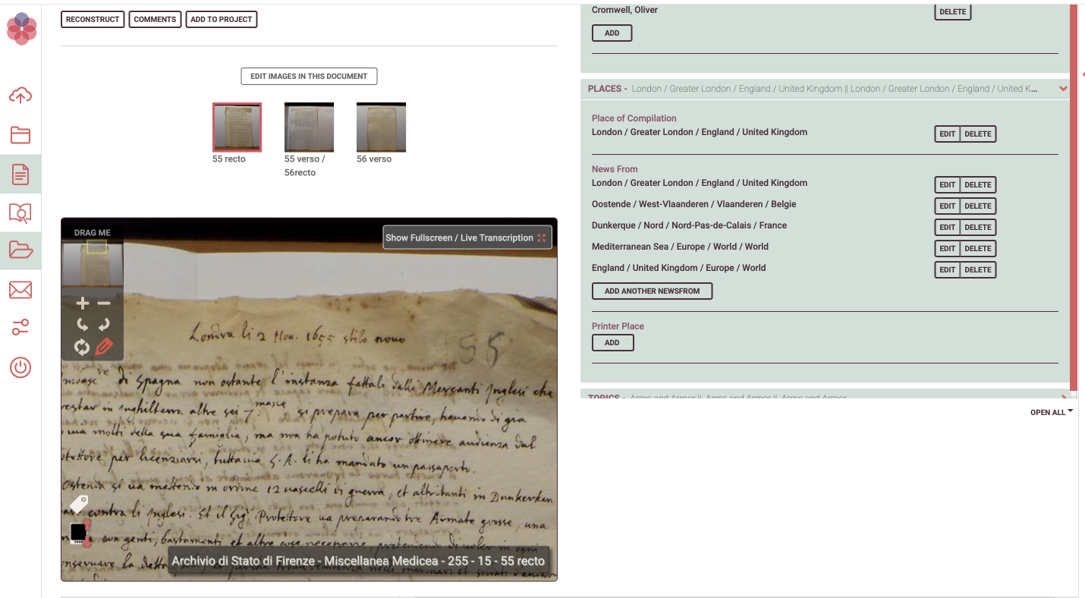
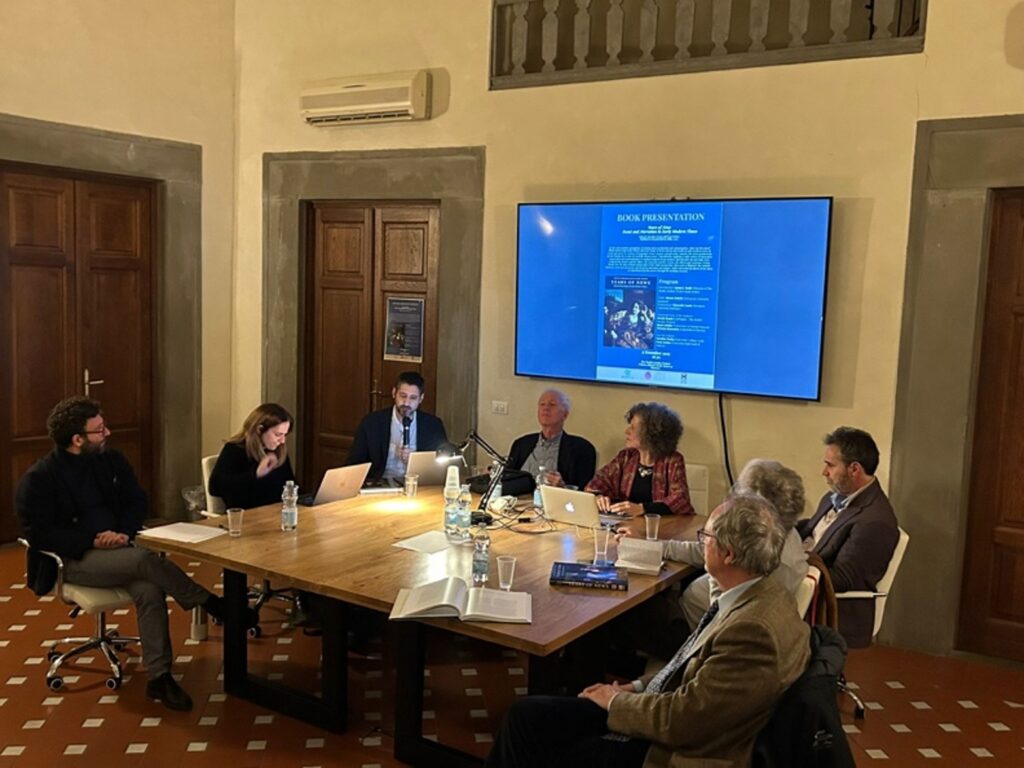
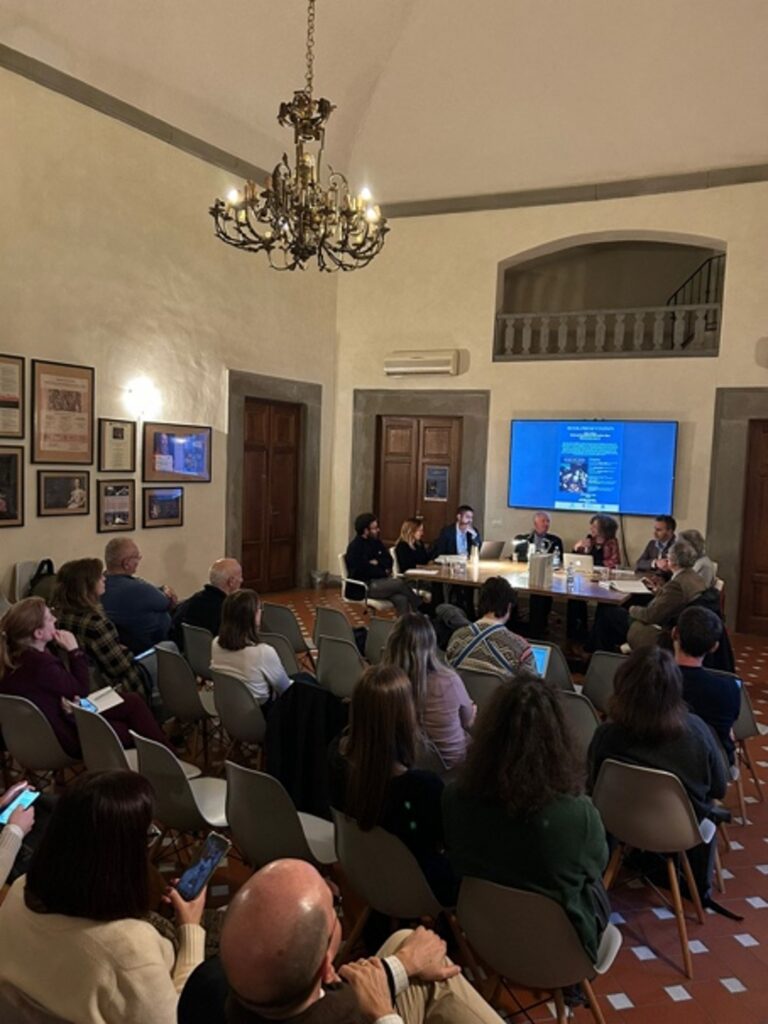
Research within The Birth of News extends beyond the archive. The programme convenes conferences, seminars, workshops, exhibitions, scholarly editions, publications and collaborative projects that bring together historians, archivists, museum professionals, digital humanists, and specialists from related disciplines. These activities foster dialogue across institutional and national boundaries while encouraging broader reflection on the historical development of communication systems and their enduring significance for contemporary society.
As new archival findings, digital technologies, and interdisciplinary perspectives continue to reshape the study of early modernity, The Birth of News offers a framework for investigating the historical foundations of information. By bringing into conversation archival science, historical and digital scholarship, the programme seeks to deepen our understanding of how communication structured political authority, commercial exchange, cultural encounter, and the circulation of knowledge across the early modern world.
PAST AND RELATED PROJECTS
The Birth of News has been, and continues to be, a hub for several international projects:
Funded by the National Endowment for the Humanities, AVVISO: Publishing the News that Made Us Modern (1537–1743) (Grant No. PW-277337-21; P.I. Alessio Assonitis) advanced the systematic transcription, contextualisation, and study of the avvisi preserved in the Medici Archive. It built upon the digital infrastructure previously developed by the Medici Archive Project through its Mellon Foundation-funded BIA and MIA platforms, consolidating the tools and methodologies that continue to underpin the programme’s research.
Funded by the Irish Research Council, EURONEWS (Grant No. IRCLA/2019/41; P.I. Brendan Dooley) was hosted by University College Cork in collaboration with the Medici Archive Project. It advanced the systematic transcription, TEI/XML encoding, and corpus-based analysis of a substantial body of handwritten newsletters, establishing the methodologies and digital resources that continue to underpin the programme’s research. Further information is available at: https://www.euronewsproject.org.
- Davide Boerio, “Le forme e l’esperienza delle notizie nell’Europa moderna,” Estudis. Revista de Historia Moderna 52 (forthcoming 2026).
- Davide Boerio, “The Archive and the News: Navigating the Early Information Society,” in Print in the Archives, edited by Andrew Pettegree and Arthur der Weduwen (Leiden–Boston: Brill, forthcoming 2026).
- Brendan Dooley and Paola Molino, eds., Years of News: Event and Narration in Early Modern Times. The Medici Archive Project Series, vol. 7 (Turnhout: Brepols, 2025).
- Davide Boerio, “1648: The Year of Revolutions,” in Years of News: Event and Narration in Early Modern Times, edited by Brendan Dooley and Paola Molino (Turnhout: Brepols, 2025), 122–140.
- Davide Boerio and Brendan Dooley, “Revolutionary News: Reporting Civil Unrest in 1640s London and Naples,” in News with an Attitude: Ideological Perspectives in the Historical Press, edited by Claudia Claridge (Amsterdam: John Benjamins, 2025), 108–132. https://doi.org/10.1075/dapsac.105.06doo
- Davide Boerio, “Coping with Information and Copying News in Early Modern Europe,” in Making Copies in Early Modern Europe: Models and Copies in an Interdisciplinary Context, edited by Maria Bellavitis (Leiden–Boston: Brill, 2025), 201–219. https://doi.org/10.1163/9789004522220_011
- Davide Boerio and Antonello Mori, “The Salvetti Project: A Journey Toward Digital Approaches and Public History,” Magazén 5, no. 1 (2024). https://doi.org/10.30687/mag/2724-3923/2024/01/004
- Davide Boerio, “News from Naples (1647–48): Communicative Effects, Public Spaces and Media Landscape,” in Tales of Two Cities: Media Events in Early Modern Florence and Naples, edited by Vincenzo Caputo, Lorenza Gianfrancesco, and Pasquale Palmieri (Rome, 2023).
- Brendan Dooley and Davide Boerio, “Hot News! The Florentine Resident Reports on the Great Fire of London,” Parliamentary History 41, no. 1 (2022): 62–82. Special Issue: Scribal News in Politics and Parliament, 1660–1760. https://doi.org/10.1111/1750-0206.12607
- Sheila Barker, “‘Secret and Uncertain’: A History of Avvisi at the Court of the Medici Grand Dukes,” in News Networks in Early Modern Europe, edited by Joad Raymond and Noah Moxham, Library of the Written Word, vol. 45; The Handpress World, vol. 34 (Leiden–Boston: Brill, 2016), 717–745.