
Beatrice Solomon Fellows 2026-27
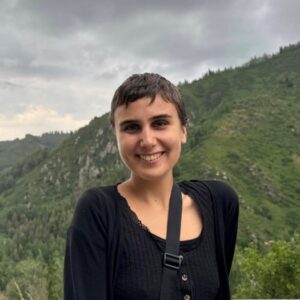
Daniela Graca is a historian of gender and music studying for a PhD in Music at the University of Cambridge, supported by the Open-Oxford-Cambridge AHRC Doctoral Training Partnership and a SSHRC Doctoral Fellowship. Her doctoral thesis examines the gendering of vocal production, focused on descriptions of the voice as a material—especially a bodily fluid—among sixteenth-century Tuscan Dominican women. This research centres around the theology and mysticism of Domenica da Paradiso along with laude (vernacular spiritual songs) created by Dominican women in Florence. At MAP, Daniela will be working primarily with the archive of La Crocetta at the Biblioteca Domenicana di Santa Maria Novella to build a fuller picture of Domenica da Paradiso’s spiritual practices, theological ideas, and writings on the voice.
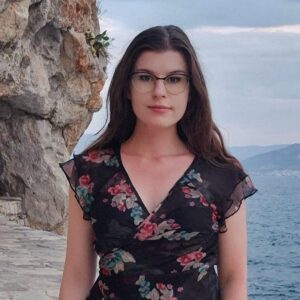
Kata Adrienn Ispanovits recently completed a Master’s degree in Medieval History at the University of Oxford, following an undergraduate degree in History at the University of Pisa. She specializes in late medieval and Renaissance Tuscany, with particular interests in women and political culture. Her research has focused on the economic, political, and legal experiences of women in fifteenth-century Tuscany, including her undergraduate project on the women of the Pazzi family in the aftermath of the 1478 conspiracy. Her Master’s research focused on reading late medieval hagiography of Pisan female saints as political texts. As a Beatrice Solomon Fellow, she will study the gendered consequences of political repression in fifteenth-century Florence and Tuscany, examining how women experienced and responded to the legal and economic repercussions of male political dissent. Her research will draw particularly on Florentine notarial, administrative, and legislative sources, comparing the 1478 Pazzi conspiracy to other 15th century cases with a focus on exile, property confiscation and legal representation.
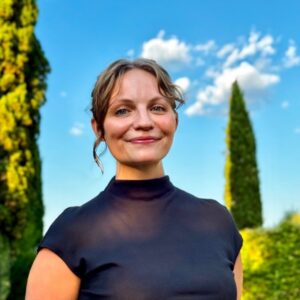
Lily Blass is a PhD candidate in Art History at the University of Bonn. She holds a binational Master’s degree in Renaissance Studies from the Universities of Florence and Bonn, where she taught undergraduate seminars on women artists, art theory and drawing practice. Building on this interest, her thesis examines how early modern women artists actively claimed artistic authorship within the social and institutional conditions of their time. Reading the self-portrait and the drawing as complementary strategies of professional self-fashioning, she anchors her research in Florence, whose drawing tradition offers particularly rich ground for tracing women’s artistic presence. As a Beatrice Solomon Fellow, she will undertake archival research to reconstruct the workshops, networks and visual dialogue through which these artists shaped their authorship.
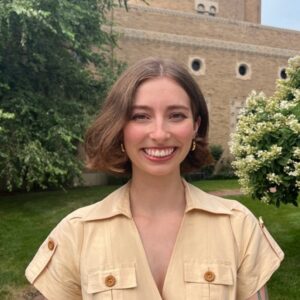
Tayleigh Greene is a Master’s student in History at Northern Illinois University, where she focuses on gender, sexuality, and emotions in sixteenth-century Italy under Dr. Brian Sandberg. As a Beatrice Solomon Fellow, her research will explore perceptions of jealousy (gelosia) and gender in the context of romantic and sexual relationships in early modern Italy, with an emphasis on Florence. Her work interrogates how early modern people experienced the emotion of jealousy and how gender norms often dictated perceptions of jealous men and women in diverging ways.
Eva Schler Fellows 2026-27
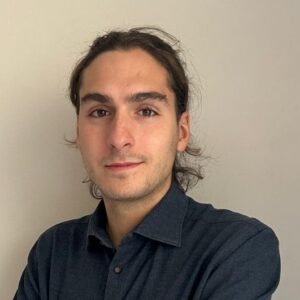
Gianluca Magro is a PhD candidate in History at the University of Milan. His doctoral dissertation examines the historicization of early modern science by the savant Giovanni Targioni Tozzetti (1712–1738) through his Notizie degli Aggrandimenti delle Scienze Fisiche (1780), the first historical account of early modern experimental science and the Accademia del Cimento (1657–67). At MAP, his research seeks to explore the urban ecology of eighteenth-century Florence: particular attention will be paid to the observational practices through which physicians monitored the city, identified environmental threats and proposed interventions aimed at improving urban health. In this process, Florence emerged as the subject of systematic analysis, documented through urban topographies, inspections, surveys and expert reports, including the Relazioni Forensi by Giovanni Targioni Tozzetti, which transformed the city into an object of scientific and political knowledge concerning the governance of urban health and hygiene.

Kinga Zięba is a PhD candidate at the Doctoral School in the Humanities of the Jagiellonian University in Kraków. She holds degrees in Art History from the Jagiellonian University and in Painting from the Jan Matejko Academy of Fine Arts in Kraków (graduated in 2025; recipient of the Award of the Polish Ministry of Culture and National Heritage at the 17th edition of The Best Artistic Diplomas 2025 exhibition). Her research focuses on the social history of artists, workshop practices, and artistic connections between the Polish-Lithuanian Commonwealth and Italy in the early modern period. Her doctoral dissertation examines the Cracow Painters’ Guild in the first half of the seventeenth century. During her fellowship at The Medici Archive Project, she is investigating the role of portraits, luxury objects, and dynastic gifts in relations between the Medici court and the Vasa dynasty c. 1590–1635. Particular attention is devoted to the circulation of dynastic portraiture and to the role of the Habsburg sisters Constance of Austria, Queen of Poland, and Maria Maddalena of Austria, Grand Duchess of Tuscany, as intermediaries in exchanges between Florence and the Polish-Lithuanian Commonwealth. By tracing the movement of objects, images, and gifts between the two courts.
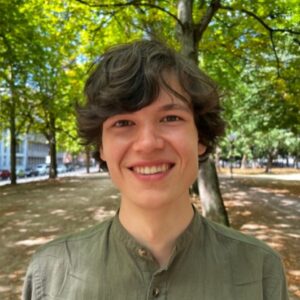
Malte John is currently completing his master’s degree in history at the University of Bonn. He also holds a BA in History with a minor in Art History from the same university. His current research project focusses on the Florentine judiciary process during the factional struggle of the 1420s and 30s that gave rise to the Medici regime. It poses the questions of how the crises of the time affected the criminal courts of Florence, how they behaved in response, and which role they played in the conflict at large. Throughout his fellowship at MAP, he will examine the rich collection of criminal sentences, acquittals, and legislation from these years that have survived in the ASF. Using quantitative methods, he will trace developments in criminal behavior as well as denunciation and sentencing practices. This will expose the underlying social tensions as well as political motives that the criminal courts became an outlet for at this critical moment in Florentine history.

Michele Castelli graduated cum laude in July 2026 with a MA in Arts, Museology and Curatorship from “Alma Mater Studiorum” Università di Bologna, defending a dissertation focused on the Master of the Baroncelli Portraits. His academic training includes a research internship at the Royal Institute for Cultural Heritage (KIK-IRPA) in Brussels within the “Centre for the Study of the Flemish Primitives” unit under the supervision of Dr. Bart Fransen, where he gained experience in digital cataloging and primary source processing. He is an active member of the Historians of Netherlandish Art (HNA). During his research residency at MAP, through research and analysis of archival sources, he will focus on the artistic and devotional reception of early Netherlandish artworks at the Ospedale di Santa Maria Nuova in Florence and the subsequent transformations these artworks underwent through grand-ducal bureaucratic transfers and public museum relocation.
Samuel Freeman Charitable Trust Fellows 2026-27
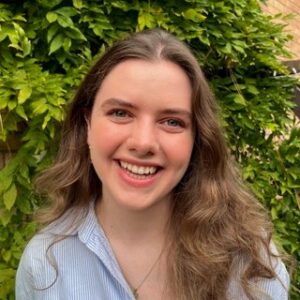
Elena Doran is a PhD candidate in History at the University of Manchester, funded by the Arts and Humanities Research Council (AHRC) North West Consortium Doctoral Training Partnership (NWCDTP). She holds an MPhil in Early Modern History and a BA (Hons) in History, both from the University of Cambridge. Elena’s doctoral thesis—titled ‘The Sartorial Construction of Non-Elite Femininities in Early Modern Florence and Tuscany, c.1540-1620’—explores how lower-rank women in early modern Tuscany (textile workers, artisans, servants, enslaved women, nuns, and sex workers) materialised gendered identities through making and wearing fashionable garments and accessories. She is particularly interested in how feminine identities were shaped through everyday material practices and embodied experiences. As a Samuel Freeman Charitable Trust Fellow, Elena will further this research by working with a diverse range of archival materials, including letters, domestic inventories, account books, guild records, legal documents, and records from charitable institutions. Her time at MAP will provide invaluable insight into the material worlds of non-elite women, demonstrating their fundamental contribution to the flourishing of the material Renaissance.

Ludovico Picciotto is a Ph.D. candidate in Political Theory in the Government Department at Georgetown University. His dissertation studies “making money” as a privileged site for state-building in sixteenth-century Europe. Focusing on the hybrid nature of money – issued by a public authority yet circulated through private exchanges –, it reconstructs its role as the theoretical and institutional space where the modern distinction between the “public” and the “private” took shape in the second half of the century. In a key chapter, his project focuses on the monetary writings of two Italian merchant-theorists – Gasparo Scaruffi (1519–1584), master of the mint of Reggio Emilia, and the Florentine patrician Bernardo Davanzati (1529–1606) – and on their argument that money is not the prince’s private property but a res publica, over which he holds administration and never dominion. As a Samuel Freeman Charitable Trust Fellow, Ludovico will work with the registers of the Florentine Zecca and with correspondence in the Mediceo del Principato to recover the intellectual discourses within which monetary policy was formulated in late sixteenth-century Florence, and to situate Davanzati within the academic and mercantile milieux that shaped his monetary thought.
Samuel H. Kress Fellows 2026-27
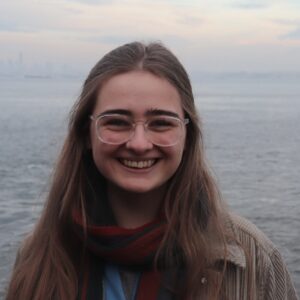
Emily Addis is a PhD candidate in musicology at the CUNY Graduate Center. Originally from Edinburgh, she trained as a double bassist at St Mary’s Music School before undertaking an academic music degree at Corpus Christi College Cambridge. The proposed title of her dissertation is “Musical Spaces in the Lives of Medici Women (1539-1588)”. Her work takes an interdisciplinary approach to music history that is informed by both the archive and her experiences as a performer, as well as the writings of scholars working across early modern studies. While in Florence, she will examine the surviving evidence for the musical practices of Eleonora di Toledo, Isabella de’ Medici, and Giulia de’ Medici, questioning their positions as students, patrons, listeners, and performers. Her sources are both archival and material and encompass paintings, rooms, and traditional paper artefacts. Special attention will be paid to portraits of Medici women with instruments and musical scores.

Emily Ostlander is a Ph.D. candidate in Art History at the University of California, Los Angeles (UCLA). She specializes in the design of courtly objects and the function of mechanical drawings produced in seventeenth-century Florence. Emily joins the Medici Archive Project as a 2026-2027 Samuel H. Kress Institutional Fellow. Her dissertation, “Mechanical Bodies: The Drawings of Baccio del Bianco, Design, and Collaboration at the Medici Court (1625-1651),” investigates drawing as an exacting, yet imaginative technology of representation at the court of Ferdinando II de’ Medici (r. 1621-1670). She situates the largely unexplored corpus of Baccio’s designs as part of the collaborative network of goods made for Ferdinando II, with specific examples executed in wood, metal, and glass. During her fellowship at MAP, she will study correspondence, inventories, and pattern books in the Florentine State Archives. Emily received her M.A. in Art History from UCLA and her B.A. degrees in Art History and Urban Design and Architectural Studies from New York University (NYU).