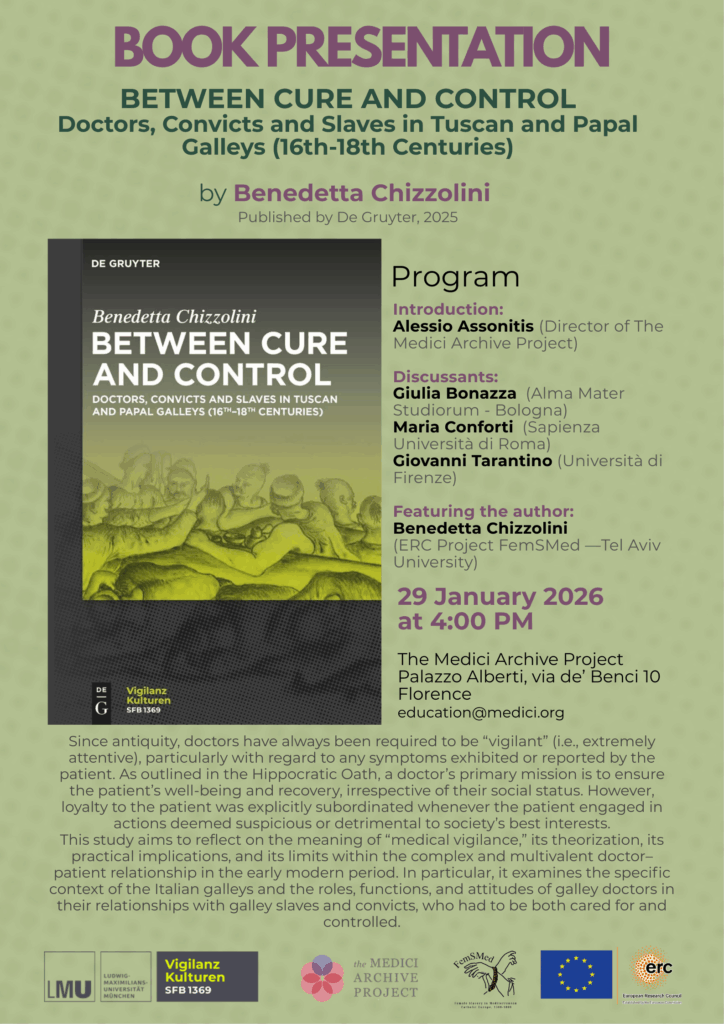
Since antiquity, doctors have always been required to be “vigilant” (i.e., extremely attentive), particularly with regard to any symptoms exhibited or reported by the patient. As outlined in the Hippocratic Oath, a doctor’s primary mission is to ensure the patient’s well-being and recovery, irrespective of their social status. However, loyalty to the patient was explicitly subordinated whenever the patient engaged in actions deemed suspicious or detrimental to society’s best interests.
This study aims to reflect on the meaning of “medical vigilance,” its theorization, its practical implications, and its limits within the complex and multivalent doctor–patient relationship in the early modern period. In particular, it examines the specific context of the Italian galleys and the roles, functions, and attitudes of galley doctors in their relationships with galley slaves and convicts, who had to be both cared for and controlled.
For more information about the book visit: